Nationwide Shipping in All 50 States
Free Shipping on Qualifying Orders Over $3,000
Current Lead Times: 6-8 Week Standard, 2-4 Week Expedited
When you start shopping for outdoor furniture, you’ll come across a lot of claims. Weather-resistant. Built to last. Sustainably made. Most of them are hard to verify, but FSC certification is one you actually can.
If you’ve seen the FSC logo on a piece of outdoor furniture and wondered what it actually means beyond a green marketing badge, this guide breaks it down in plain terms.
The Forest Stewardship Council is an independent, nonprofit organization founded in 1993 by a coalition of environmentalists, business leaders, and community representatives who wanted a credible, verifiable standard for responsible forestry. Their goal was straightforward: forests can be used and enjoyed without being destroyed.
Today, the FSC is widely regarded as the gold standard in sustainable forestry. In the United States alone, the FSC certifies over 6,000 sites and nearly 4,000 companies’ chains of custody. Moreover, the FSC logo is recognized by over 52% of consumers worldwide and has become the benchmark that both buyers and brands rely on when evaluating the environmental integrity of wood products.
FSC certification covers two distinct things: forest management and chain of custody.
Forest management certification means the forest itself has been audited and verified to meet the FSC’s standards. Those standards require that trees are harvested responsibly to prevent deforestation and forest degradation, that forest areas with irreplaceable value, like old-growth forests, are identified and maintained, that workers are provided fair wages and adequate safety protocols, and that plant and animal species are protected.
Chain of custody certification is the part that affects furniture specifically. It verifies that forest-based materials produced according to FSC’s rigorous standards are credibly tracked along the product’s path from the forest to becoming finished goods. In other words, it’s not enough for a forest to be certified. Every company that handles the wood along the way, from the mill to the manufacturer, must also meet FSC standards and undergo independent audits.
The FSC label on a finished product signals that the materials used during production have met the chain of custody requirements at every step in the supply chain, from sourcing to distribution. That is what makes it meaningfully different from a brand simply calling itself sustainable.
Outdoor furniture is a category where wood sourcing deserves particular scrutiny. The United States is the world’s leading importer of tropical wood furniture from timber-producing nations, and the logging of remaining primary forests to supply demand for tropical wood products is a significant contributor to deforestation. Much of that wood comes from supply chains with little transparency and no independent verification.
FSC certification is a way to opt out of that system. When you purchase outdoor furniture made from FSC-certified lumber, you know the wood was sourced from a forest managed to protect biodiversity, respect local communities, and ensure the land stays productive for future harvests.
There is also a practical quality argument. FSC-certified lumber is often more consistent than uncertified wood because it is raised under controlled conditions, with uniform spacing, pruning, and harvesting schedules that mean straighter grain and fewer defects. For handcrafted furniture, better material consistency translates directly to a better finished product.
Built with Materials You Can Believe In
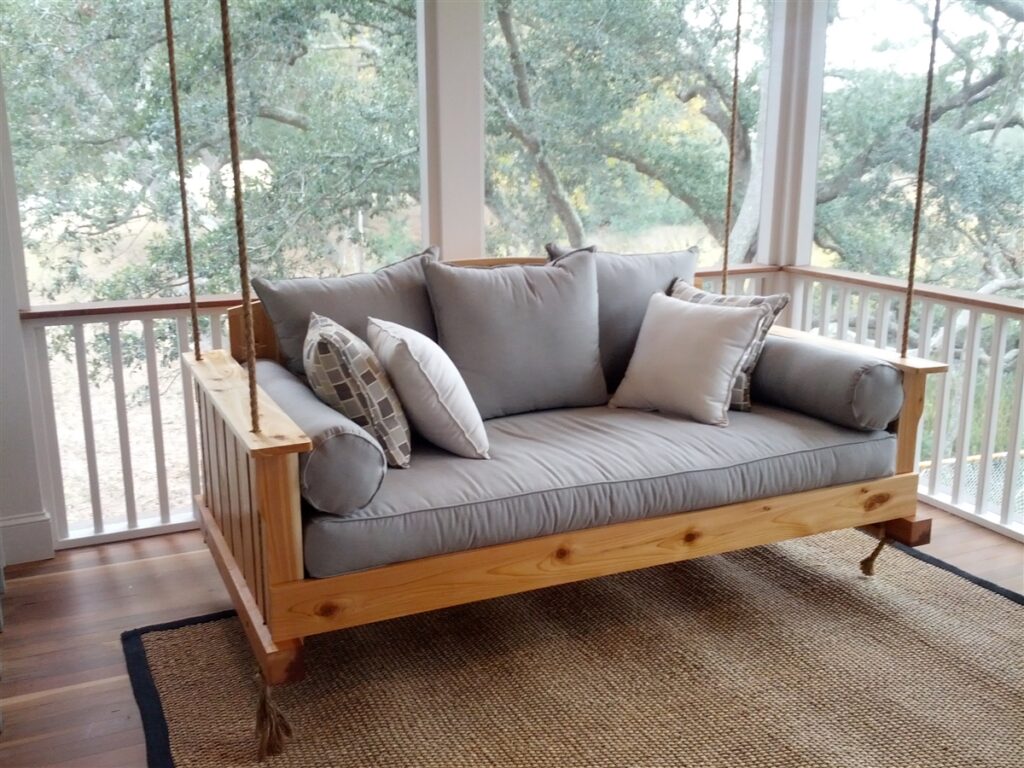
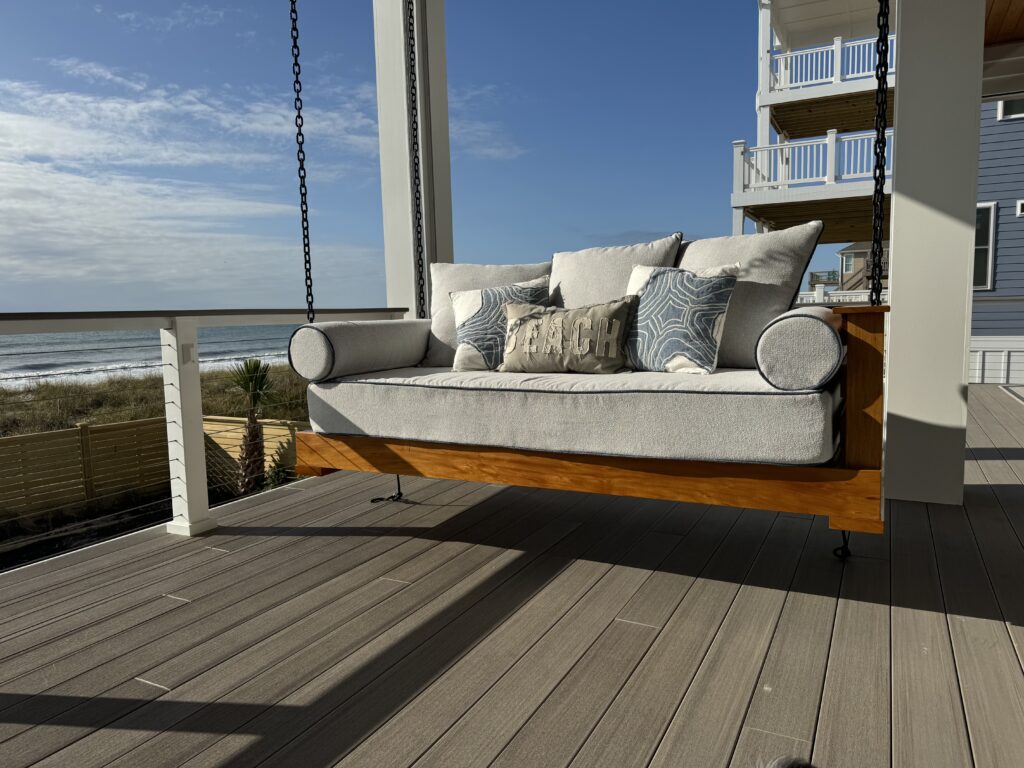
Every Lowcountry Swing Bed is handcrafted in Charleston, SC using FSC-certified wood and Sunbrella performance fabrics.
FSC-certified lumber is not the cheapest option. The cost of FSC-certified wood products is typically between zero and fifteen percent more expensive than non-certified alternatives. For a furniture maker buying lumber in volume, that difference adds up.
At Lowcountry Swing Beds, we made the choice to absorb that cost because we believe it is the right way to build. A swing bed is not a seasonal purchase. It is something built to be part of your home for decades, passed down through families, and used long after cheaper alternatives have been replaced and discarded. The materials that go into something like that should reflect the same long-term thinking.
The FSC logo is the starting point, but it helps to know what you are looking at. The FSC uses three label types: FSC 100% (all wood from FSC-certified forests), FSC Mix (a combination of certified and controlled sources), and FSC Recycled (reclaimed or recycled wood fiber). Each tells a different part of the sourcing story.
If you want to verify a product’s certification, you can look up its license code on the FSC website. Every legitimate FSC certificate holder has a publicly searchable record. If a brand claims FSC certification but cannot point to a certificate or license code, that is worth questioning.
Choosing FSC-certified outdoor furniture is one of the more direct ways a purchasing decision can connect to forest health. It creates real market demand for responsibly managed forests, which in turn gives landowners and mills a financial reason to maintain their certification. The alternative, chasing the lowest price regardless of sourcing, creates demand in the other direction.
We built FSC certification into every Lowcountry Swing Bed because we believe outdoor furniture should be something you feel genuinely good about. If you have questions about how we source our lumber or what goes into building a swing bed, we are always happy to talk through it.
Related Posts